

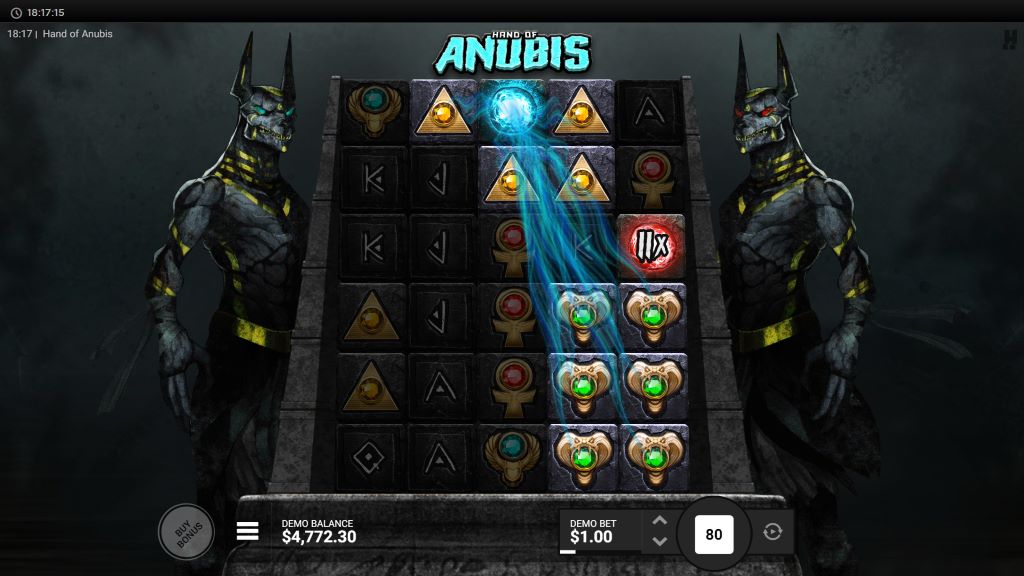
For players enjoying online slots in the UK, game integrity isn’t just a nice feature—it represents the whole foundation https://handofanubis.net/. Everything hinges on the Random Number Generator. This RNG is the digital core that makes each spin a unique, fair event. The Egyptian-themed Hand of Anubis slot isn’t limited to fair play; its RNG carries independent verification and certification. We’ll examine how these number generators work, detail the strict testing they undergo for the UK market, and show precisely how Hand of Anubis employs this tech to build a trustworthy game. Getting a handle on this process enables players feel at ease, aware their search for ancient treasure is fueled by pure, audited chance.
Within the Hand of Anubis slot, the RNG is the hidden director for your expedition. Each time the reels start spinning, the RNG immediately selects a value that dictates the exact symbols that will fall. This governs everything, from a basic spin to the game’s special features. The cascading reels mechanic, where winning symbols disappear and new ones descend, demands a fresh RNG call for every cascade level. The same applies for the Anubis Quest bonus round. The process of collecting scarabs to unlock free spins with growing multipliers is governed by RNG outcomes for scarab collection and every spin within the bonus itself.
The game’s medium volatility and its stated RTP (usually 96.47% in its UK-certified form) are mathematical products of the RNG’s programming. Volatility just describes the frequency and size of payouts as determined by the random distribution. This creates a balance between smaller, regular wins and the chance for bigger, less frequent payouts. Developers craft this experience by setting specific probabilities for each symbol and feature inside the RNG algorithm. So that thrilling moment when the reels display matching symbols, or the bonus round lights up, is a direct product of this certified random process. It ensures every player has the same shot at the treasures inside the ancient tomb.
Even clear technology, some lingering myths about slot RNGs still persist. It helps to clear these up, particularly for a UK audience. A widespread belief is that a machine becomes “due” for a win after a string of losses. Because each spin is independent, the RNG has no memory of past results. This idea, termed the gambler’s fallacy, is incorrect. Another myth claims the timing of your button press can change the result. The RNG operates at remarkable speed. The number is selected the exact millisecond the command is received, so human timing is meaningless. Some also assume betting higher amounts leads to better outcomes. The RNG is unaware to your stake size. It only selects symbol combinations.
Understanding these facts is key to a balanced approach to slots like Hand of Anubis. The certified RNG ensures a few concrete things:
Acknowledging these points helps players view the game for what it is: recreation with random rewards. It is not a puzzle to crack or a system to trick. The UK Gambling Commission advocates this perspective as part of a more responsible gambling mindset.
While specialists handle the technical verification, UK players have influence. You can follow practical measures to ensure you’re playing a legitimate version of Hand of Anubis. Your primary action is to only choose casinos authorized by the UK Gambling Commission. That authorization is your assurance that every game on the site has passed the necessary RNG tests. Once you’re at a regulated casino, search for a “Game Fairness” or “Responsible Gaming” section. You’ll usually find this in the website’s footer. This area should display links to reports from accredited testing agencies, demonstrating the game’s RNG and RTP have been tested.
Trustworthy game providers, such as the developer of Hand of Anubis, typically publish the expected RTP rates and game risk level directly within the game’s details or support pages. It’s recommended to examine this details. Another helpful source is the webpage of the verification bodies in person, like eCOGRA or iTech Labs. They sometimes list the games they’ve certified. Taking these simple verification steps allows you to discover the Hand of Anubis tomb with real confidence. You’ll understand the UK’s strict regulatory system is diligently functioning to make your experience entertaining and equitable.
RNG verification builds the trust that supports the UK online gambling industry together. It turns an intangible digital game into something as credible as a physical machine on a casino floor. For you, the player, it means your ability or your approach for when to bet or cash out doesn’t change the fundamental spin result. It stays a pure game of chance, governed by a certified random system. This creates a completely level field. It also guards players against fraudulent software created to tweak odds or withhold legitimate payouts. The UKGC’s demand for independent certification is a powerful consumer protection tool. It clearly differentiates licensed, legitimate operators from unregulated black-market sites.
This verification also supports responsible gambling. When players know the game is fair and outcomes are random, they can make better decisions. They can trust the game’s stated RTP and volatility, instead of chasing losses based on superstition or a false sense of pattern. In an engaging game like Hand of Anubis, knowing the RNG is certified serves as a safety net. It allows you enjoy the entertainment without a layer of suspicion. The process holds game providers and casinos accountable, too. They must be transparent about their certifications and game fairness, which helps promote a healthier gambling environment for everyone in the UK.
Each operator offering online gambling in the United Kingdom needs a licence from the UK Gambling Commission. The UKGC is acknowledged globally for its strict standards. One non-negotiable licence condition mandates that every game, including Hand of Anubis, must use RNG software tested and certified by an accredited independent lab. Firms like eCOGRA, iTech Labs, and GLI hold the accreditation to conduct these audits. They run deep statistical analysis on millions of simulated game rounds, checking for any bias, predictability, or drift from expected random patterns. A game only gets its compliance certificate after succeeding in these exhaustive tests.
Certification is never a box you tick once. To retain their UKGC licence, game providers place their games and core RNG systems through regular re-audits. This practice secures ongoing compliance, especially after software updates or changes. For the player in the UK, it means choosing Hand of Anubis at a UKGC-licensed casino provides you with a version that has survived these rigorous checks. You can often discover the certification reports yourself. They’re usually posted on the testing lab’s website or in the casino’s own fairness section. This transparency is by design. The entire regulatory structure is designed to protect the player, making sure games are fair and operators stay accountable.
The technical dimension of RNG testing is exhaustive. It analyzes the algorithm from all perspectives to confirm its integrity. Labs utilize advanced mathematics and push the software through billions of cycles, replicating years of play in a very short time. They check the frequency of wins, the distribution of symbols, and how often bonus features trigger. All this data must line up with the game’s published theoretical Return to Player (RTP) percentage. A significant discrepancy indicates a failed audit. That game will never be released in a regulated market like the UK.
A suite of fundamental tests constitutes the audit’s backbone. The Chi-Squared test confirms if the observed distribution of outcomes aligns with what was expected. Serial Correlation tests search for hidden links between consecutive numbers, demonstrating one result doesn’t affect the next. The Runs Test evaluates sequences of similar outcomes to verify they appear with natural randomness. Auditors also scrutinise the ‘entropy source’. This is the original seed data that starts the entire RNG sequence, and it must be fully chaotic. For Hand of Anubis, these tests collectively confirm that Anubis scatter symbols, tomb bonus triggers, and multiplier values are all genuine products of chance.
A Random Number Generator represents a complex algorithm that generates a never-ending stream of unpredictable numbers. In a slot like Hand of Anubis, this sequence determines the exact outcome the instant you press spin. Each number links directly to the symbols that land on the screen. This action occurs immediate and completely isolated from any spin that came before or will come after. The RNG doesn’t remember anything. Every result represents a brand new event, which makes predicting or interfering with outcomes impossible. This technology acts as the main divider between licensed, regulated slots and shady alternatives. It’s the bedrock of fair play for UK online casinos.
The algorithm’s complexity ensures its output is statistically random. It replicates the same core unpredictability as a spinning roulette wheel or a freshly shuffled deck of cards. A game with features like Hand of Anubis asks more from its RNG. It doesn’t just determine the initial symbol drop. It also works out the results for each cascade when winning symbols vanish, and it determines if and when the Anubis Quest bonus round kicks off. All this computation takes place invisibly behind the game’s visuals and soundtrack. The experience appears smooth, but the fairness is absolute. The RNG functions constantly, even when no one is playing, so the number chosen at the exact moment of your spin is as random as it can be.

